Alternator
Build a purchase-ready requirement, understand market pricing, and compare qualified Chinese manufacturers in one sourcing brief.
Find Suppliers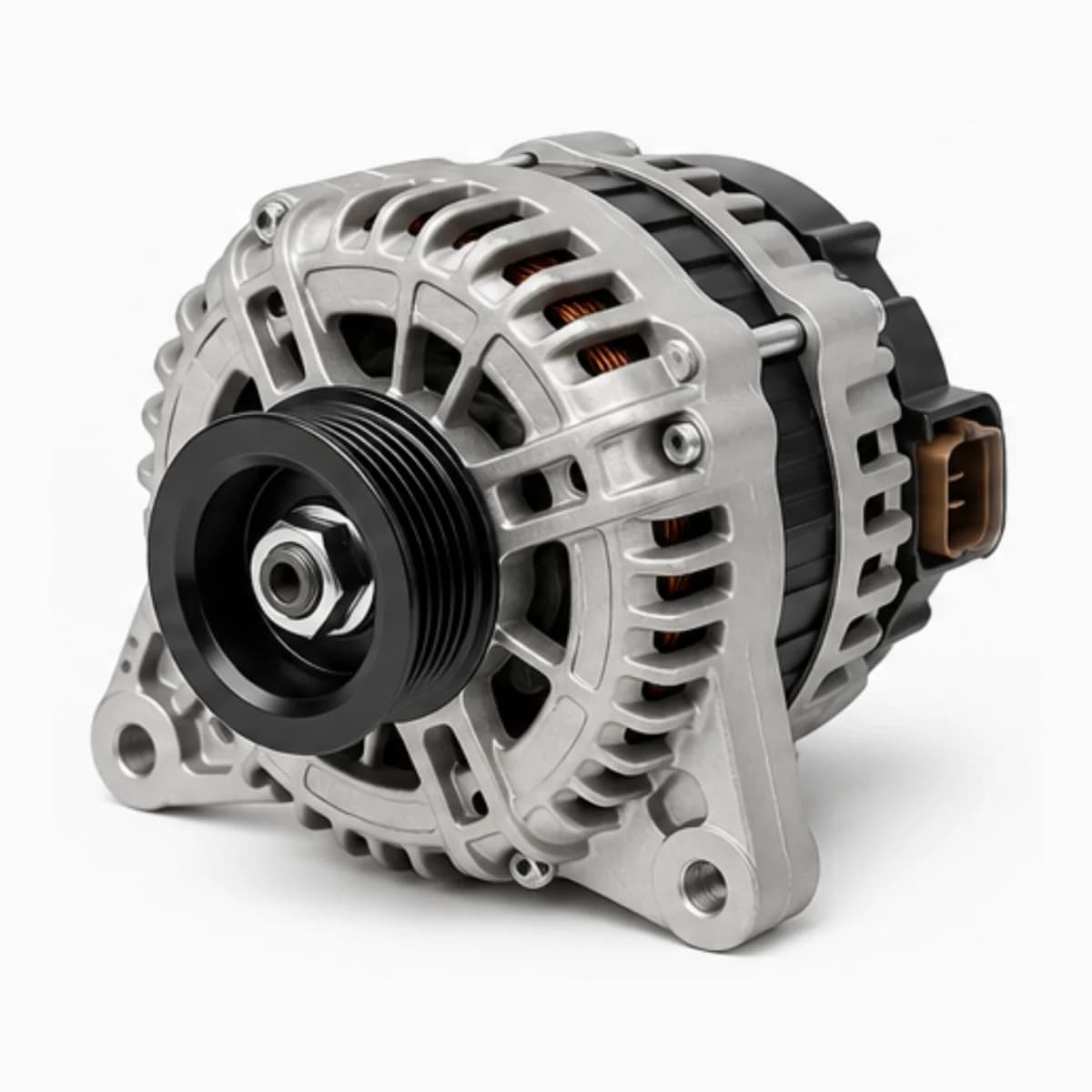
Requirement analysis
Product Analysis
Key Points of the Requirement
Define the system voltage (12V or 24V), rated output current (for example 90A, 120A, or 150A), pulley type (fixed, one-way clutch, or decoupler), mounting configuration and mounting foot dimensions, and the regulator type with its connector pinout. State the target vehicle make, model, and year or the OE cross-reference number, the required rotation direction, and operating environment expectations such as temperature range, vibration, and dust or moisture exposure. Confirm whether the unit must be supplied new or remanufactured and whether regulator and rectifier service parts must be available.
Cost Structure Analysis
The dominant cost drivers are copper windings for the stator and rotor, bearings, the rectifier and voltage regulator electronics, aluminum die-cast housings, and shaft and fastener machining. Copper and magnet price fluctuations flow directly into unit cost. Every unit requires 100% end-of-line electrical testing, and new SKUs may require housing casting molds and winding tooling as one-time charges. Remanufactured units reuse cores and cost significantly less but depend on core availability and quality.
Estimated Cost Range
For a new 12V 90–120A passenger-car alternator, excluding tooling, freight, and tax, indicative factory pricing is approximately $32–$52 per unit for 100–499 units, $24–$39 for 500–1,999 units, $18–$30 for 2,000–4,999 units, and $14–$24 at volumes above 5,000 units. Heavy-duty 24V units and high-output (150A+) designs price 30–60% higher. Final quotations depend on output rating, bearing and regulator specifications, and commercial terms.
Procurement Considerations
Prioritize manufacturers with IATF 16949 certification, 100% end-of-line output and regulator testing, and stable component sourcing for bearings (NSK, SKF, or equivalent) and regulators. Request performance curves showing output across the speed range, thermal and endurance test reports, and paint or plating specifications for corrosion resistance. Provide the OE sample or drawings, confirm pulley and connector compatibility, and clarify warranty terms (typically 12–24 months), tooling ownership, packaging, Incoterms, and delivery destination. Samples should be bench-tested for regulated voltage, ripple, bearing noise, and balance before production approval.
Supplier shortlist
Top 3 matched suppliers
A comparison-ready shortlist balancing quality systems, product capability, capacity, and commercial flexibility.
#1 recommended
Zhejiang Dehong Automotive Electronic & Electrical Co., Ltd.
A leading Chinese manufacturer specializing in the research, development, and production of automotive alternators. The company provides high-efficiency alternators for commercial vehicles, passenger cars, and construction machinery, serving major domestic and international engine manufacturers.
#2 recommended
Chengdu Huachuan Electric Parts Co., Ltd.
A large-scale state-owned enterprise focused on automotive electrical systems. They are a primary supplier of starters and alternators for the Chinese automotive industry, with significant R&D capabilities in permanent magnet and brushless alternator technology.
#3 recommended
Fujian Kwise Generator Co., Ltd.
A specialized manufacturer of high-quality brushless AC synchronous alternators. Their products are widely used in telecommunications, railways, oil fields, and marine applications, ranging from small portable units to large industrial power systems.
Put in a Requirement to Find Better Matches
Add only the product details that matter to you to receive a more relevant supplier shortlist.