Engine Sensor
Build a purchase-ready requirement, understand market pricing, and compare qualified Chinese manufacturers in one sourcing brief.
Find Suppliers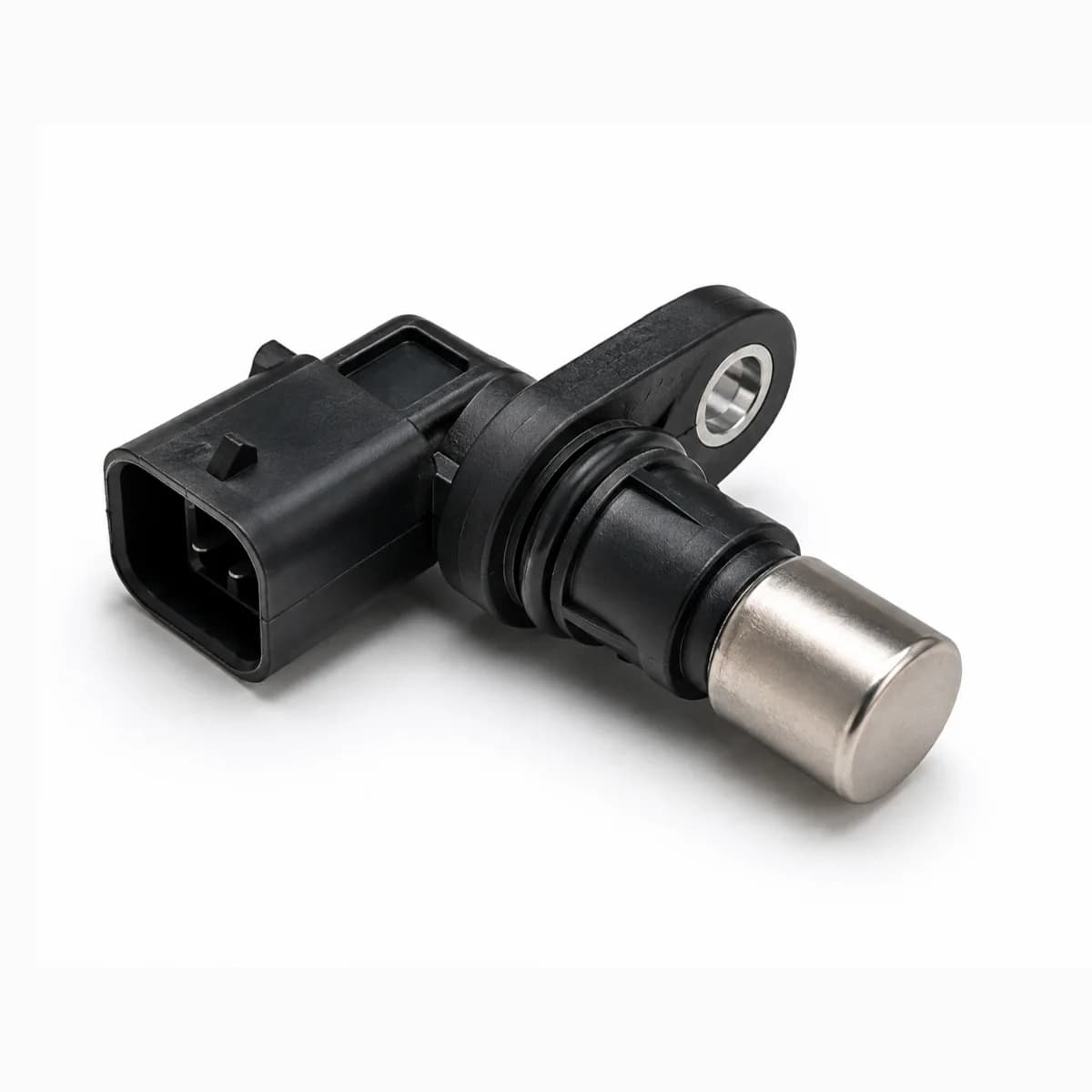
Requirement analysis
Product Analysis
Key Points of the Requirement
Define the exact sensor function—crankshaft position, camshaft position, manifold air pressure, oxygen, or coolant temperature—and the OE cross-reference number for the target vehicle. Specify the output signal type (Hall effect, inductive, analog voltage, or CAN/LIN), the connector housing and pinout, operating voltage, measurement range, accuracy tolerance, and response time. State the temperature range, vibration level, and media exposure (oil, coolant, or air) the sensor must withstand, and whether the unit must arrive pre-calibrated or be calibrated after vehicle installation.
Cost Structure Analysis
Costs are driven by the sensing element (Hall IC, piezo, or NTC element), application-specific ICs, the printed circuit board, plastic injection-molded housing, terminal and connector contacts, potting compound, and overmolding. Because sensing accuracy is critical, every unit undergoes calibration and 100% functional testing, which is a significant share of conversion cost. Tooling for housings and connector overmolds is a separate one-time charge. Higher volumes reduce per-unit setup and calibration fixture costs.
Estimated Cost Range
For standard automotive engine sensors such as crankshaft position or temperature sensors, excluding tooling, freight, and tax, indicative factory pricing is approximately $2.50–$6.00 per unit for 100–499 units, $1.90–$4.50 for 500–1,999 units, $1.40–$3.40 for 2,000–4,999 units, and $1.10–$2.60 at volumes above 5,000 units. Wide-band oxygen sensors and integrated CAN-node sensors price several times higher. Final quotations depend on sensing technology, accuracy class, and commercial terms.
Procurement Considerations
Prioritize manufacturers with IATF 16949 certification, PPAP documentation capability, and automotive-grade component sourcing (AEC-Q qualified ICs). Request calibration correlation data against the OE part, 100% test coverage confirmation, and environmental test reports covering thermal shock, humidity, vibration, and media resistance. Provide OE samples, connector mating parts, and the target waveform or signal specification, and confirm tooling ownership, warranty terms, ESD-protective packaging, Incoterms, and delivery destination. Samples should be checked for signal accuracy, connector fit, sealing, and consistency across the batch before production approval.
Supplier shortlist
Top 3 matched suppliers
A comparison-ready shortlist balancing quality systems, product capability, capacity, and commercial flexibility.
#1 recommended
Shanghai Baolong Automotive Corporation
A leading global supplier of automotive components, specializing in the research, development, and manufacturing of intelligent sensing systems. They provide a wide range of engine-related sensors including pressure, temperature, and speed sensors for global OEMs.
#2 recommended
Guangdong Super-Power Technology Co., Ltd.
A high-tech enterprise dedicated to the R&D and production of automotive electronic control systems. Their product line includes exhaust gas temperature sensors, pressure sensors, and various actuators for engine efficiency and emission control.
#3 recommended
Zhejiang Songtian Automotive Motor System Co., Ltd.
Established in 1993, Songtian is a high-tech enterprise focusing on automotive motor systems and electronic components. They produce various engine sensors and cooling system components for both the domestic and international aftermarket and OEM sectors.
Put in a Requirement to Find Better Matches
Add only the product details that matter to you to receive a more relevant supplier shortlist.