Seatbelt
Build a purchase-ready requirement, understand market pricing, and compare qualified Chinese manufacturers in one sourcing brief.
Find Suppliers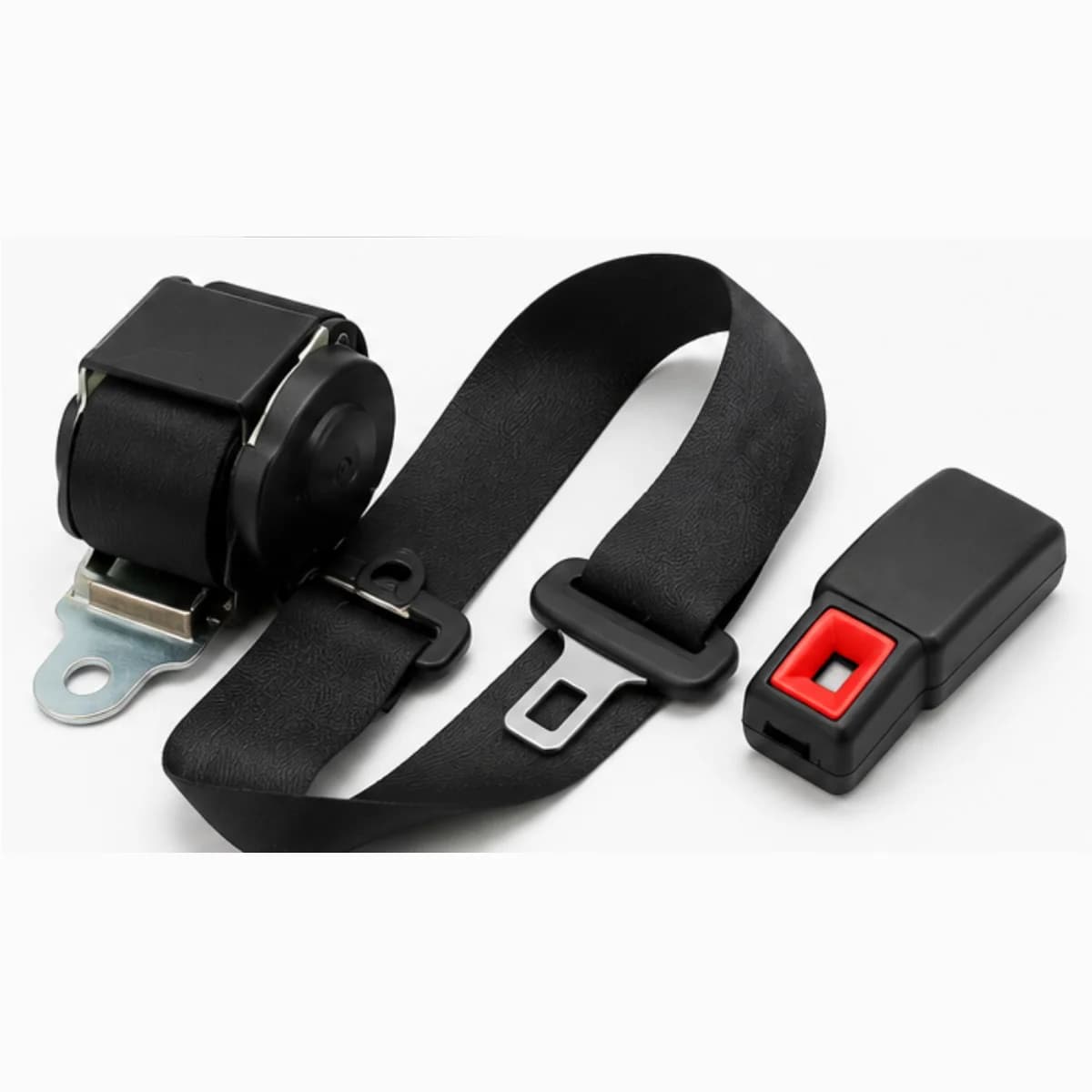
Requirement analysis
Product Analysis
Key Points of the Requirement
Define the belt configuration (two-point, three-point, or integrated), retractor type (ELR, ALR, or ELR with pretensioner and load limiter), webbing width and material specifications, and anchor fitting types. State the target vehicle or application, mounting point dimensions, and the mandatory safety standard the assembly must meet, such as ECE R16 or GB 14166. Specify webbing color and UV-stability requirements, buckle design, and whether labels and installation instructions must accompany each unit.
Cost Structure Analysis
The main cost drivers are woven polyester webbing, the retractor mechanism (spring, vehicle-sensitive and web-sensitive locking sensors), stamped anchors and buckles, pretensioner modules where fitted, and assembly. Safety-critical production requires 100% retractor locking-function testing and per-batch pull testing, plus destructive sample testing, all of which add conversion cost. Certification testing per standard is a significant fixed cost amortized over volume. Higher volumes reduce webbing weaving setup and mechanism assembly costs per unit.
Estimated Cost Range
For a standard three-point ELR front seatbelt assembly certified to ECE R16, excluding tooling, certification fees, freight, and tax, indicative factory pricing is approximately $9.00–$16.00 per unit for 500–1,999 units, $7.00–$12.50 for 2,000–9,999 units, $5.20–$9.50 for 10,000–49,999 units, and $4.00–$7.50 above 50,000 units. Pretensioner and load-limiter versions price substantially higher. Final quotations depend on mechanism content, certification scope, and commercial terms.
Procurement Considerations
Prioritize manufacturers with current ECE R16 or equivalent homologation and IATF 16949 certification, and insist on homologation certificates that name your exact product and holder arrangements. Request per-batch pull-test records, webbing certificates covering strength, abrasion, and UV aging, and retractor sensor function test data. Provide vehicle anchor dimensions and buckle mating parts, and confirm batch traceability markings, tooling ownership, warranty terms, packaging, Incoterms, and delivery destination. Samples should be checked for retractor lock sensitivity, webbing consistency, buckle release force, and labeling before production approval.
Supplier shortlist
Top 3 matched suppliers
A comparison-ready shortlist balancing quality systems, product capability, capacity, and commercial flexibility.
#1 recommended
Joyson Safety Systems (Ningbo) Co., Ltd.
A global leader in mobility safety, Joyson Safety Systems provides safety-critical components, systems, and technology to the automotive and non-automotive markets. They are a primary supplier of integrated safety solutions including seatbelts and airbags for major global OEMs.
#2 recommended
Yanfeng Automotive Smart Safety Systems Co., Ltd.
A subsidiary of Yanfeng, one of the world's largest automotive suppliers. This division focuses specifically on the research, development, and manufacturing of automotive passive safety systems, providing advanced seatbelt technologies and airbag modules.
#3 recommended
Jiangsu Jiujiu Jiu Technology Co., Ltd.
Specialized in the production of automotive seat belts and emergency locking retractors. The company provides a wide range of safety belt products for passenger cars, commercial vehicles, and specialized transport, known for their rigorous testing standards.
Put in a Requirement to Find Better Matches
Add only the product details that matter to you to receive a more relevant supplier shortlist.