Brake Pads
Build a purchase-ready requirement, understand market pricing, and compare qualified Chinese manufacturers in one sourcing brief.
Find Suppliers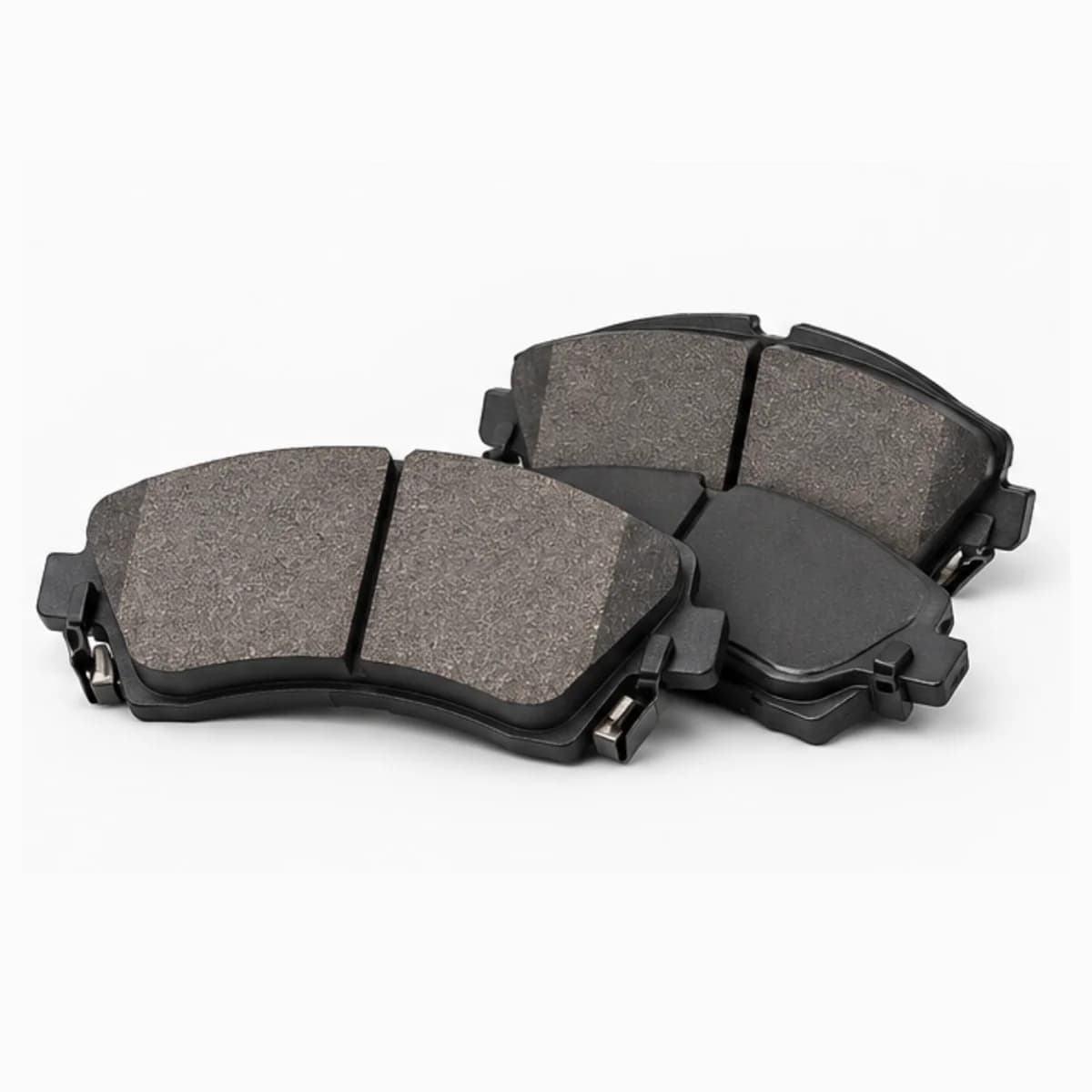
Requirement analysis
Product Analysis
Key Points of the Requirement
Specify the vehicle make, model, and year, the axle position (front or rear), and the OE reference number or backing-plate drawing. Define the friction material class—low-metallic, ceramic, semi-metallic, or organic—along with the required friction coefficient, operating temperature range, and the performance standard the parts must meet, such as ECE R90 or the applicable national standard. State whether shims, wear sensors, chamfers, slots, and fitting hardware are included, and set expectations for noise, dust, rotor wear, and fade behavior.
Cost Structure Analysis
Costs are driven by the friction compound formulation, steel backing plates, powder coating, shims and damping layers, springs and abutment hardware, grinding and chamfering operations, and burnishing and testing. Ceramic and copper-free formulations command a premium over semi-metallic compounds. Tooling for new backing-plate shapes is a separate one-time charge, and packaging requirements for retail boxes add noticeably to per-unit cost. Higher volumes spread compounding batch setup and press setup costs across more units.
Estimated Cost Range
For a standard four-pad set of low-metallic brake pads certified to ECE R90, excluding tooling, freight, and tax, indicative factory pricing is approximately $6.00–$11.50 per set for 100–499 sets, $4.50–$8.50 for 500–1,999 sets, $3.20–$6.50 for 2,000–4,999 sets, and $2.40–$5.00 at volumes above 5,000 sets. Ceramic and copper-free formulations typically price 20–40% higher. Final quotations depend on the formulation, hardware inclusions, certification scope, and commercial terms.
Procurement Considerations
Prioritize manufacturers holding IATF 16949 certification with laboratory-backed friction formulations and batch traceability. Request ECE R90 or equivalent homologation certificates covering your exact part numbers, shear-strength and compressibility test reports, and noise dynamometer (AK-Master or equivalent) data where available. Provide OE samples or backing-plate drawings, confirm shim bonding method and hardware kit contents, and clarify tooling ownership, warranty terms, packaging, Incoterms, and delivery destination. Samples should be checked for plate flatness, friction-surface consistency, coating quality, and edge-code markings before production approval.
Supplier shortlist
Top 3 matched suppliers
A comparison-ready shortlist balancing quality systems, product capability, capacity, and commercial flexibility.
#1 recommended
Shandong Gold Phoenix Co., Ltd.
A leading manufacturer in China's friction material industry, specializing in the research, development, and production of brake pads and discs for various vehicle types, including passenger cars and commercial vehicles.
#2 recommended
Shandong Xinyi Automobile Parts Co., Ltd.
One of the largest professional manufacturers of brake pads and brake shoes in China, known for its extensive R&D capabilities and supply to global automotive manufacturers.
#3 recommended
Hangzhou Feiying Friction Material Co., Ltd.
Established in 1995, this company focuses on high-quality friction materials specifically designed for commercial vehicles, heavy-duty trucks, and buses, providing both OEM and aftermarket solutions.
Put in a Requirement to Find Better Matches
Add only the product details that matter to you to receive a more relevant supplier shortlist.